This blog is fictional for entertainment and testing purposes. Since the content is made up, please do not take it as real-world fact or advice.
Banshee vs the Heritage Mourning Candle: Two Approaches to Scent for Grief
Grief & Mourning
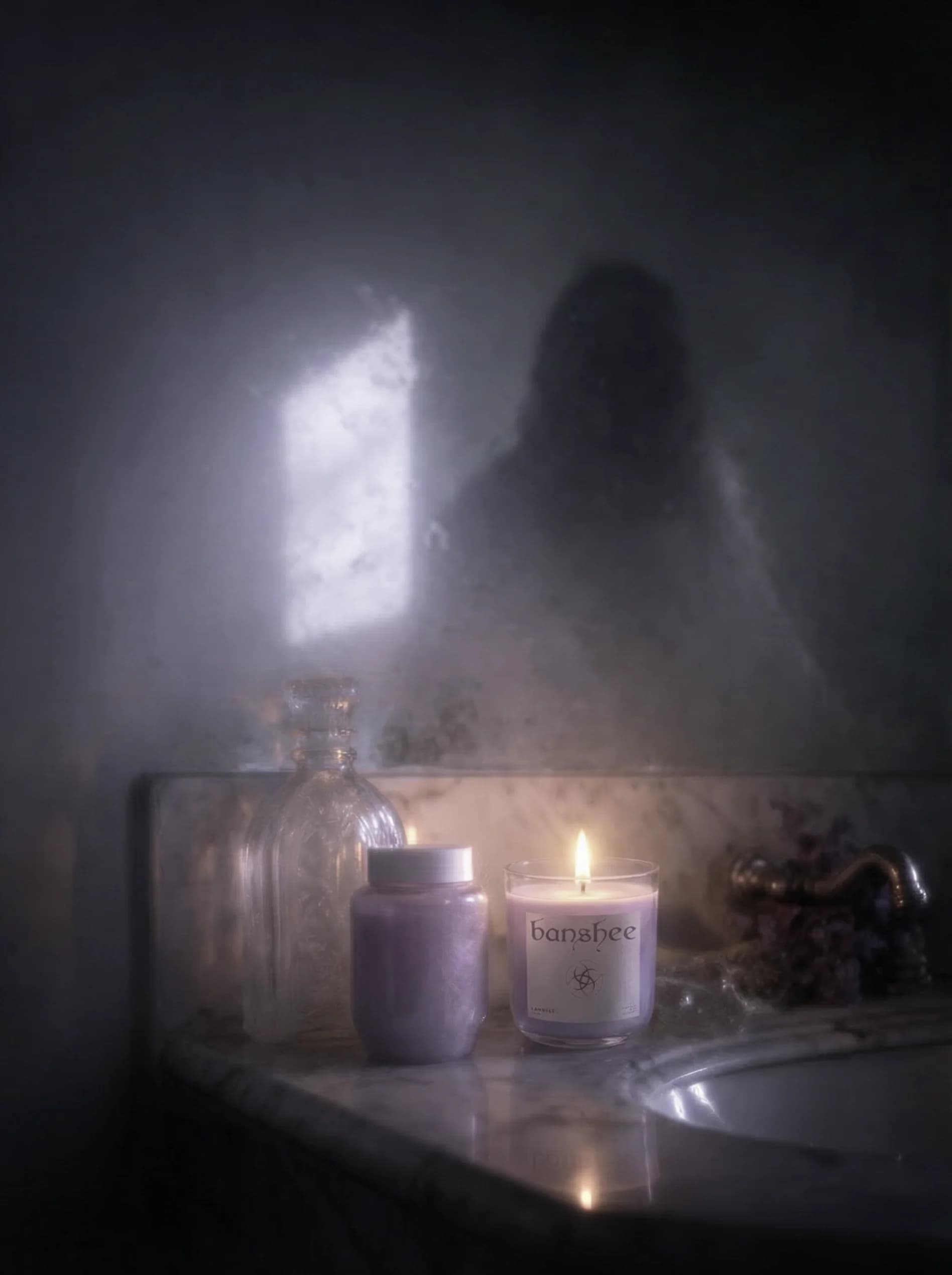
There is a long tradition of mourning candle.
In Catholic Europe, the candle has been the central object of grief for centuries. Lit at the altar. Lit at the wake. Lit in the home on the anniversary of a death. The candle has carried, in this tradition, much of the work that other cultures have given to incense, to song, to the keening women, to the sound of the prayer bell.
The heritage mourning candle, as a category, sits inside this tradition. It is a particular kind of object — usually tall, often in a vessel that looks ecclesiastical, with a scent profile built around incense materials. Frankincense. Myrrh. Beeswax. The smoke of a censer in a stone church. The materials are old, the references are old, the candle itself is built to honour something that has been honoured this way for a long time.
This is one approach to mourning scent.
Banshee is a different approach.
What the heritage candle does
The heritage mourning candle works by reference.
It evokes the scent of the rooms where mourning has formally happened. The cathedral. The chapel. The high mass. The funeral itself. When you light it, the room is asked to become, briefly, a smaller version of one of those spaces. The smoke, the wax, the resin — all of them gesture toward an architecture larger than the room.
For some people, this is exactly what mourning asks for. The familiar scent of the formal grief space, brought home, makes the private grief feel held by something larger. The tradition is doing the holding. You are not alone with the loss; you are inside a centuries-old practice for handling it.
This is real and good work. The heritage candle does it well.
What Banshee does
Banshee does not reference the cathedral.
The scents in our line are not built around the materials of formal grief. There is no high frankincense, no church myrrh, no beeswax-and-resin profile that would translate to "altar." The reference is somewhere else entirely — Irish wakes more than Roman masses, hearths more than altars, the materials of old rural rooms more than the materials of formal religious ones.
This is a quieter and more private approach.
The Banshee candle for grief is not asking the room to become a chapel. It is asking the room to remain a room — your room, the actual room you are in — but to have its hour marked by something honest about what you are carrying.
Lament, in our line, is the candle for acute grief. Its scent profile is heavier than the others — wet wood, smoke residue, a faint salt, something low and bitter underneath. It does not gesture toward a church. It gestures toward a room that has been sat in for too long, by someone who is not ready to leave it.
Peat is the longer companion. For the years after grief has become sorrow. Slow earth, smoulder, the deep warmth of fire that has been burning a long time. It does not gesture anywhere. It just sits with the hour.
Which approach is right
Neither approach is right in general. They are right for different people.
The heritage candle is right for the person whose grief is connected to a tradition. The Catholic who grew up with the funeral mass. The Orthodox Christian who knows the smell of the censer in childhood. The person for whom the formal rituals of grief are the rituals — for whom the chapel scent in a private room is a continuation of the public practice they already trust.
The Banshee candle is right for the person whose grief is more private. The one who does not have a tradition to fall back on, or has stepped away from the one they were raised in. The one for whom the chapel reference would feel borrowed. The one who wants the candle to honour the loss without invoking an architecture that does not belong to their actual life.
Both are honest approaches to a serious need.
On giving either as a gift
The heritage candle is the gift for someone you know holds the tradition. If you are giving a grief candle to someone who attends mass, who keeps an icon, who marks anniversaries with formal religious observance — give the heritage candle. It will be received as continuous with the rest of their practice.
A Banshee candle is the gift for someone whose grief practice is being built from scratch, or for someone whose grief is held outside formal religious life. If you are giving to a friend whose loss is recent and whose practice for marking it is still forming, Banshee gives them a small private object to build the practice around.
Neither gift is appropriate as a default for someone in active grief. Both should be given with care. If you do not know which the person would prefer, ask — gently, and once, and only if you know them well enough to ask at all.
A candle given thoughtfully in the wake of a loss is one of the kinder gifts. A candle given carelessly can register as a misreading of what the person actually needs. The choice between the two approaches is part of the care.
What both share
Both the heritage candle and the Banshee candle are, in the end, doing the same thing.
They are giving the bereaved a small object to light. A small private gesture for an enormous private weight. A way of saying, in a room that no one else has entered today, that the loss has been seen.
The materials differ. The reference differs. The practice differs.
The work is the same.
The work is the same.