This blog is fictional for entertainment and testing purposes. Since the content is made up, please do not take it as real-world fact or advice.
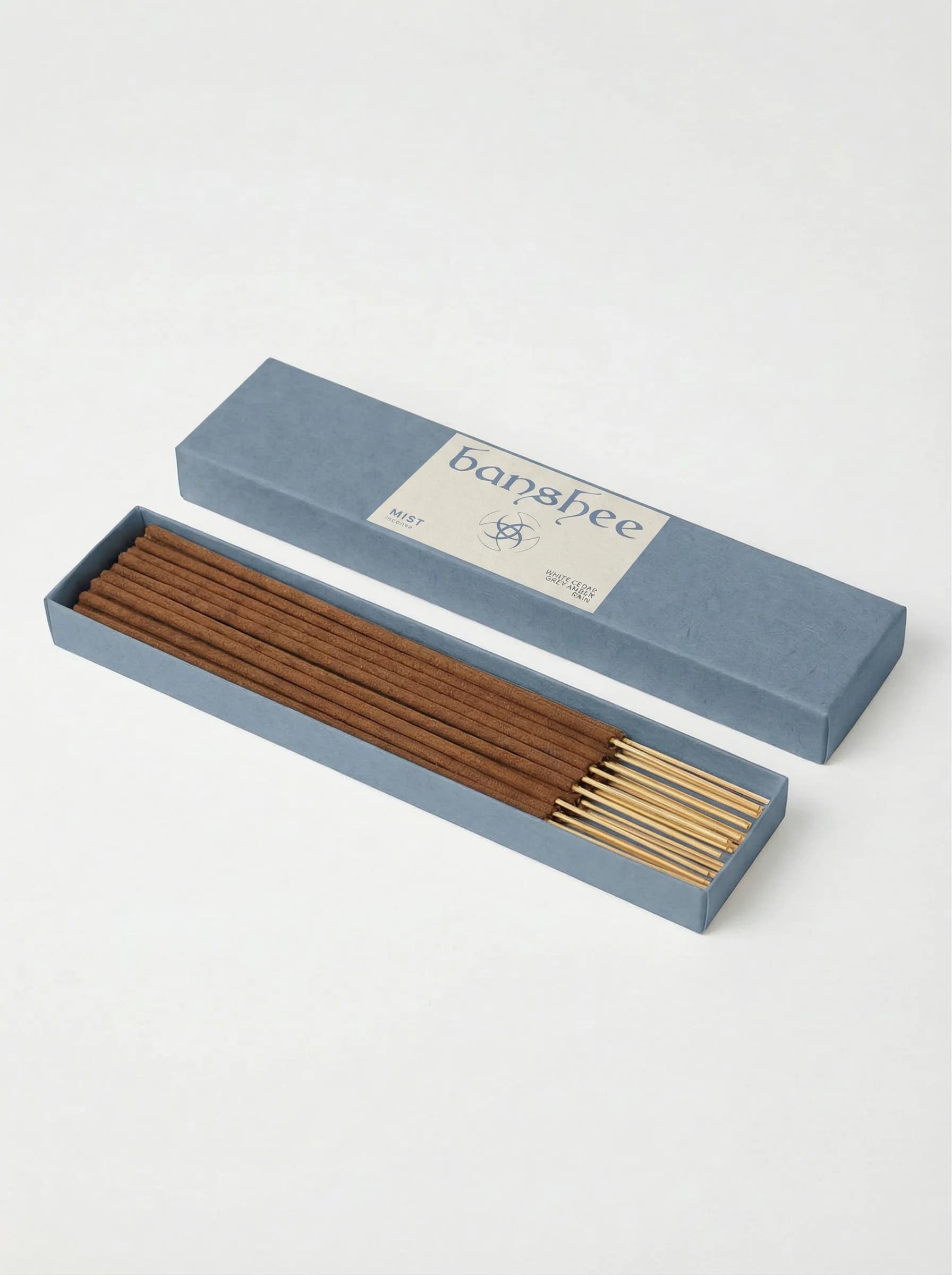
A candle and a stick of incense do different work in a room.
A candle is patient. It builds slowly. It reaches full presence after an hour or two and then holds that presence for the rest of the burn. The scent settles into the room and stays.
Incense is fast and specific. It establishes a scent within minutes. It marks a defined window — the burn time of the stick — and then leaves. The scent lingers in the room afterward, softer, for a while. Then it is gone.
The two tools are not in competition. They are for different kinds of held attention.
When to reach for incense instead of a candle
The candle is for the long hour. For settling in. For the evening you are going to be in the room for two or three hours.
Incense is for the marked moment. For the practice that has a beginning and an end. For the twenty minutes you are going to do something specific, after which the moment closes.
If you sit for ten minutes in the morning before work, incense is the right tool. The stick is the timer as well as the scent. The window opens when you light it. The window closes when it goes out. You stand up. The day begins.
If you read in the evening for two hours, the candle is the right tool. The incense would be over too quickly. The candle holds the room for the full reading.
The practice
The practice we keep returning to is one of the older ones, in one form or another.
You light the incense. You sit. You do not check the time. You wait, doing whatever you came to the chair to do — reading, thinking, sitting without object — until the incense has burned through. When it has, you stand up.
That is the whole thing.
The window is whatever the stick is. Twenty minutes for most of our incense. Forty for the longer ones. The body learns the window. After a few weeks of the practice, you stop needing the clock for that part of your day.
Why incense works for this
Three things, in order of importance.
First, the stick is a physical timer. The room knows how long the practice has been going by how much of the stick remains. You do not have to glance at a phone or a clock — both of which would pull your attention out of the room. The incense itself is the marker.
Second, incense delivers scent at a different temperature than a candle. The burn point is hotter. The smoke carries molecules a wax pool cannot vaporize as efficiently. The scent profile of incense is sharper, more present at the top, more immediate. For the marked-moment practice, this immediacy matches the structure of what you are doing.
Third, the act of lighting incense is more deliberate than lighting a candle. The stick has to be held to the flame longer. The smoke has to be coaxed. The first breath of scent comes in a way that asks for attention. This focused beginning is part of why incense pairs so well with practices that have a defined start.
Where to do this
Anywhere small.
Incense does not need volume the way a candle needs volume. A bedroom is enough. A small study. A corner of a larger room. The bath, if you have a bath you sit in.
What the space does need is permission. The corner of a busy living room, with people moving through it, will not hold the practice. You will not actually settle. The space has to be one where, for the twenty minutes of the burn, no one will speak to you and nothing will be asked of you.
If your home does not have such a corner, build one. A chair turned to face a wall is enough. The wall is the practice's privacy. The chair is the practice's location. The incense is the practice's timer.
What you will notice
After some weeks of the practice, the body will start to do something interesting.
You will smell the first breath of the incense and feel, almost immediately, the kind of attention you came for. The scent is teaching the body what to do. The body, which is good at learning by repetition, will begin to drop into the state more quickly each time.
This is what people mean when they say a practice deepens. They do not mean the practice changes. They mean the body responds to it faster.
The incense did not change. You did.
On the four-scent question
Each of our scents works with this practice, in a slightly different register.
Mist, in incense form, is for the morning practice. The day is in front of you. The scent matches the threshold of starting.
Peat is for the after-work practice. The day is behind you. The scent matches the settling.
Veil is for the practice closest to sleep. The room is already thinned. The scent meets it where it is.
Lament is for the harder evenings. The practice you turn to when something has shifted and you need a window in which to be alone with it.
You do not need all four. Most people use one. The one that matches the hour you actually have available.
The incense is small. The practice is small. What it makes available is not.
What it makes available is not.