This blog is fictional for entertainment and testing purposes. Since the content is made up, please do not take it as real-world fact or advice.
The Threshold: Banshee at the Front Door, Banshee at the Bedside
Ritual & Practice
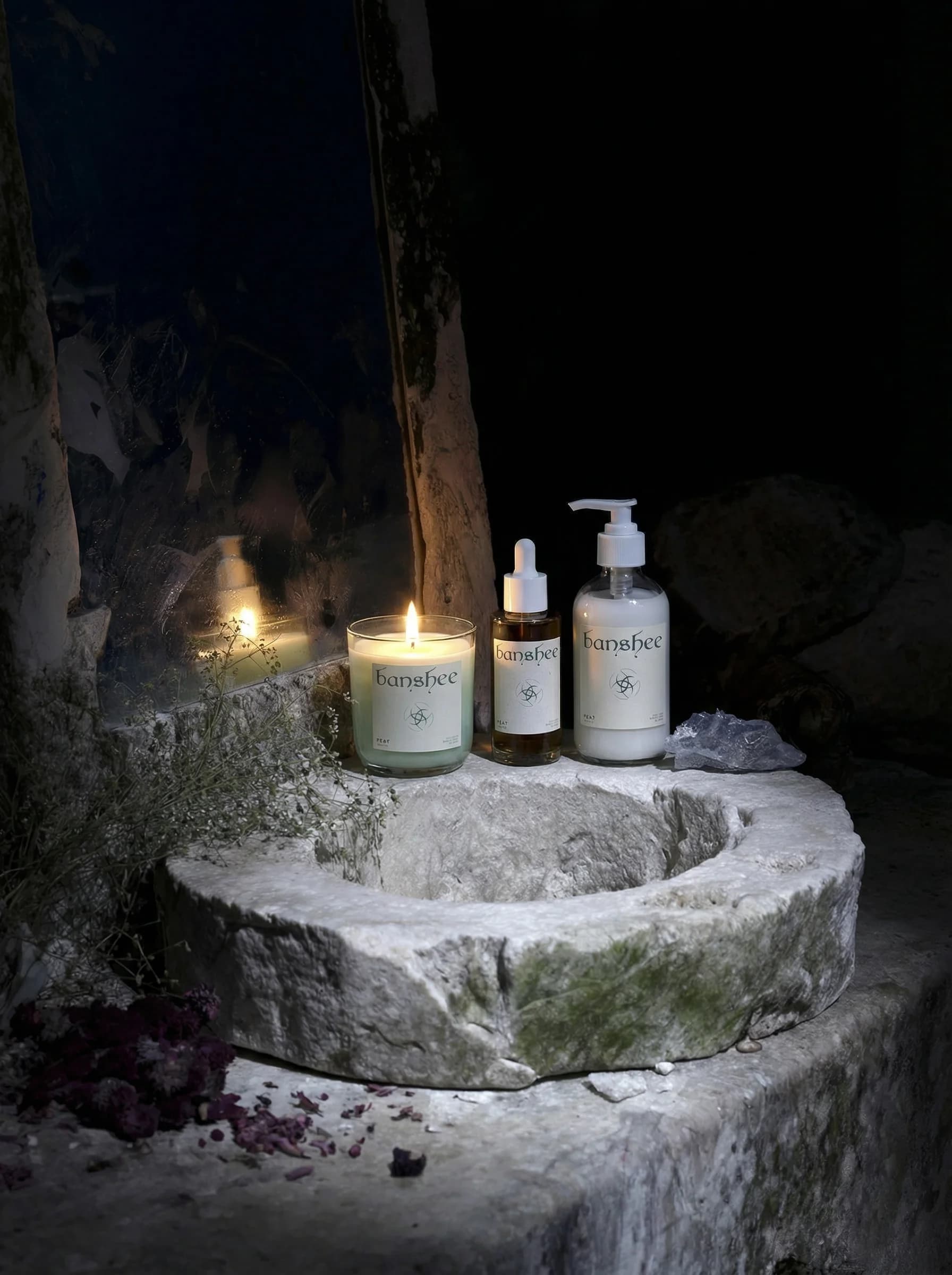
There are two thresholds in most homes that are stronger than the others.
The front door is the obvious one. It is the line between outside and inside, day and home, the world and the smaller world of your own walls. Crossing it is one of the most repeated gestures a person makes.
The bedside is the other one, and people notice it less. It is the line between the day and the night, between awake and asleep, between the body that has been carrying things and the body that will set them down. Crossing it is the last act of most days.
Both deserve to be marked.
What the front door wants
The front door wants a scent that meets you in motion.
You are not staying. You are arriving. The scent has to register quickly — within the first few breaths of coming in — and then recede, because what you are doing next is moving further into the house. A scent that lingered heavily at the door would follow you into rooms where it does not belong.
The scent for the front door is built around openness. Cool air. A small dampness. Something with a quiet woodiness underneath, which is what a hallway naturally holds — the memory of coats, of wet boots, of the air the door let in.
Mist is the candle for this. Light it for the half hour around when you expect to come home, or for the half hour around when guests are arriving. Let it run while the entrance is in use. Put it out when the doorway hour has passed.
The scent will do its work and then quietly stop. The hallway will hold a trace for an hour after. That trace is the part that matters most. It is what tells the body, on subsequent crossings, that this threshold has been kept.
What the bedside wants
The bedside wants a scent that meets you in stillness.
You are not arriving. You are not going anywhere. The body is preparing to be horizontal for a long time. The scent has to register softly — not announce itself, not produce a wakeful response — and then accompany the slow folding-down that the body is already doing.
The scent for the bedside is built around quiet. Wool. A trace of something powdery, like old chalk or iris root. A faint green that registers as the inside of a cool room rather than as anything outdoors.
Veil is the candle for this. Light it in the half hour before you intend to sleep. Read by its light if you read. Let it burn while you do whatever you do in the last quiet stretch of the day — change clothes, put the day's small things away, drink water.
Put it out before you sleep. Always. A candle next to a bed is not a candle to leave burning.
The room will hold the scent for the first half of the night. By morning it will be gone. The bedside has been marked. The body has crossed.
On using both
Most homes can absorb both candles without competition.
The front door candle is for daytime and early evening. The bedside candle is for the last hour. They do not overlap in time. They do not overlap in space. They are doing the same kind of work — marking a threshold — in two different locations.
If you can only have one, choose for the threshold that matters most to you. For people who live alone, the bedside threshold is often the stronger one. The day has been your own; the night is the deeper transition. For people who share the home, the front door threshold is often the stronger one. The entrance is where the most cycling happens.
Either is correct. The threshold you mark is the threshold you will feel.
What the unkept threshold costs
A house with no marked thresholds is not a worse house. It is a fine house.
But the body, over time, loses track of where the crossings are. The day blurs into the evening. The evening blurs into bed. The morning blurs into work. The transitions that used to be felt become invisible. The body still passes through them — it has to — but it does so without registering that anything has changed.
This is one of the small quiet costs of modern life. The transitions are still there. The body still needs them. But the markers have been removed.
A candle at the front door and a candle at the bedside is the smallest possible way of putting two markers back.
The cost is small. The recovery is real.
The room knows
If you keep these two thresholds for a few weeks, the rooms will start to feel different.
The hallway will read as an entrance again, not as a corridor you walk through. The bedroom will read as a sleeping room, not as a room with a bed in it. The architecture of the house will reassert what it is for, because you have given it the marker it needed.
This is not mystical. It is what happens when small repeated gestures train a space.
The room knows.
So, eventually, will you.
So, eventually, will you.