This blog is fictional for entertainment and testing purposes. Since the content is made up, please do not take it as real-world fact or advice.
Wool, Wax, and Wood: The Material Language of Banshee
Material & Craft
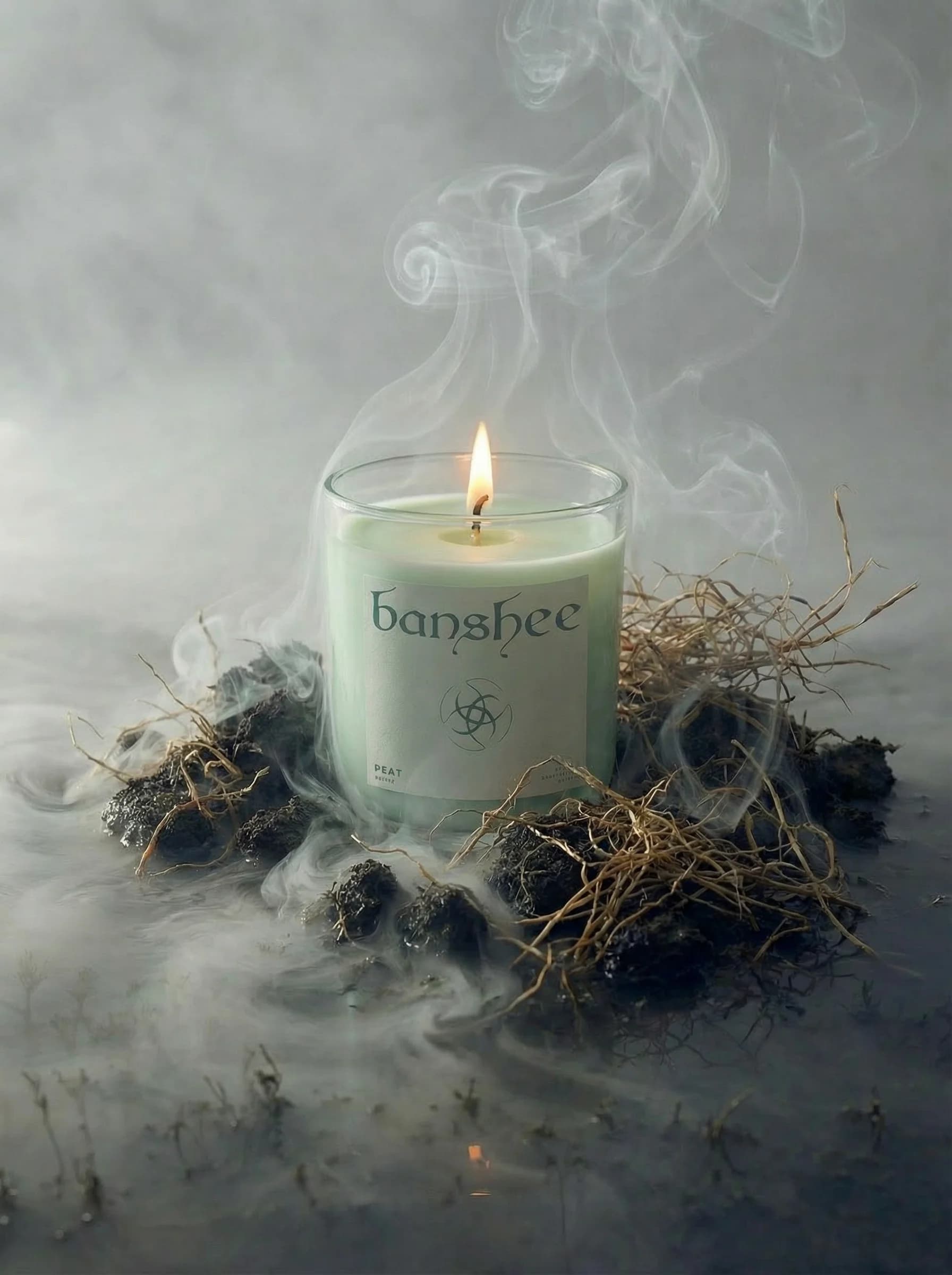
A fragrance is a language, and the language is made of materials.
Most fragrance languages are bright. They speak in citrus, floral, fresh herb, clean musk. They were built for the parts of life that want lift — the morning, the public hour, the social space.
The Banshee language is different. The materials we work with are quieter, denser, older. They are the materials of old buildings, old rooms, old weather. This piece is about the three that come up most often in our compositions, and what they do when they enter a room.
Wool
Wool is the most domestic of the three.
It is the smell of a blanket folded in a wardrobe. The faint lanolin warmth of a sweater that has been worn outside. The dry felted texture of an old rug. Wool, in fragrance, is rarely literal — there is no essential oil pressed from sheep — but the impression of wool is achievable through specific combinations of soft musks, low animalics, dry powdery notes, and a particular kind of clean dustiness.
We use wool, structurally, in the compositions that need a sense of being held. Veil leans heavily on a wool register. The scent reads as something soft against the body, even though the candle is on the table and not on the skin. The brain registers wool as warmth and weight without alarm, and the body responds to it the way it would respond to actually being wrapped in a blanket.
This is the older logic of wool: it is the material humans have used to keep themselves warm at night for longer than almost any other. The scent carries the memory of that function.
Wax
Wax sounds like an odd material to include in a list of fragrance language, since wax is what candles are made of.
But beeswax, in particular, has its own scent — honey-adjacent, slightly powdery, warm in a specific organic way that no synthetic replicates exactly. And the scent of wax burning, even when the wax is unscented, carries a recognizable atmosphere. Old chapels smell of wax. Old libraries that still polish their wood smell of wax. The Catholic and Orthodox traditions both rest, in part, on the cumulative scent of wax burned over centuries.
We use wax notes structurally in the compositions that need a sense of ceremony — without the ceremony being ecclesiastical. Lament, in particular, has a wax register near its base. The scent reads as something that has been burning for a long time, in a room that has held many such burnings. The wax is not the candle's wax (which is unscented as a wax). The wax is the scent memory of every candle that has been lit in serious rooms.
This is the older logic of wax: it is the material humans have used to hold attention in religious and ceremonial spaces for thousands of years. The scent carries the memory of that function.
Wood
Wood is the most material of the three.
Wood, in fragrance, can be many things. Cedar is bright and slightly pencil-like. Sandalwood is creamy and almost soft. Oud is dark, animalic, divisive. Each wood has its own register. But the wood that runs underneath the Banshee line is none of these in their pure forms. The wood we use is closer to weathered timber — wood that has been outside, that has been wet and dry many times, that has darkened with age.
This wood reads as structural. It is the smell of an old beam, of the inside of a barn, of a wooden floor that has not been refinished in a century. It is not glamorous. It is not luxurious. It is just present, in the way the structural wood of a building is present once you start noticing it.
We use this kind of wood note in Peat and in Lament, in slightly different registers. In Peat, the wood is closer to dry timber, slightly smoked. In Lament, the wood is closer to wet driftwood, salt-darkened. Both are old. Both are the wood of buildings or landscapes that have lasted.
This is the older logic of wood: it is the material humans have used to make shelter for as long as there have been shelters. The scent carries the memory of that function.
What the three share
Wool, wax, and wood are not glamorous materials. They do not appear in luxury fragrance ads. They do not signify wealth, modernity, or aspiration.
What they signify is something older. Domesticity. Ceremony. Shelter. The three basic functions a building has historically served: a place to be warm, a place to attend, a place to be enclosed.
The Banshee line is built around these three functions. The scents are for the rooms in your home that serve them. The bedroom where you are kept warm. The sitting room where you attend to what the day has been. The hallway and the doorway where the shelter begins.
The materials are the language. The compositions are the sentences. The candles are the way the sentences enter a room.
We have not invented anything. We have arranged what was already there.
The materials have been in human rooms for a long time. The candles are a small new way of inviting them back in.
The candles are a small new way of inviting them back in.
Rain on Slate: The Atmosphere of an Irish Wake
Cultural Essay