This blog is fictional for entertainment and testing purposes. Since the content is made up, please do not take it as real-world fact or advice.
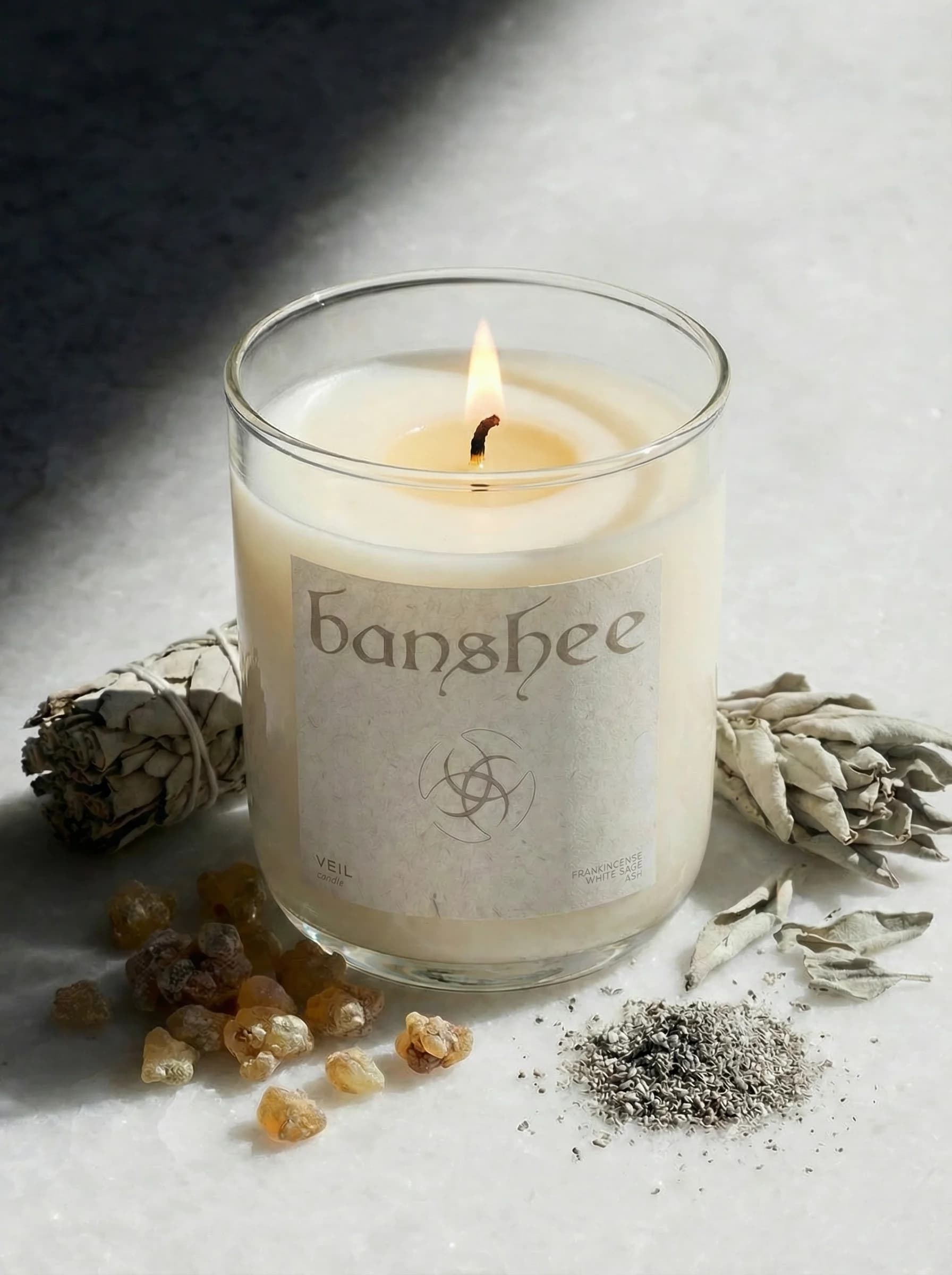
The banshee is not a marketing figure.
She is one of the older figures in Irish folklore. Bean sídhe, in Irish — the woman of the sídhe, the fairy mounds, the people of the otherworld. She appears, in the old accounts, before a death in certain families. Her sound is the warning. The keen she carries is for a person not yet gone but soon to be.
She is not a ghost. She is not a monster. She is not a demon, which is the role most folklore that enters English gets flattened into. She is something stranger and quieter than any of those — a presence whose function is to mark the threshold between this life and what comes after, and to do so audibly, so that the family has been warned.
Most cultures have a figure like this. Few have one as specific.
Why we took the name
We took the name knowing it carried weight.
The fashion in fragrance branding has been, for a long time, toward the smooth and the suggestive. Words that imply luxury without committing to a meaning. Words from Latin or French because they sound considered. Words that could attach to a candle, a perfume, a hotel, a wine, with equal vagueness.
We did not want one of those words.
We wanted a name that would tell the truth about what we make. We make candles for the in-between hours. For the threshold. For the room that has been changed by an arrival or a departure. The figure who lived at that threshold, in the folklore of the place we are from, was the banshee.
The name is a description, not a decoration.
What we are not doing
We are not making mourning candles.
A line of mourning candles would be a smaller and more specific thing than what we make. Some of our scents work for grief — Lament was made with grief in mind, and Peat is the long companion for the years that follow. But our line is not for funerals. It is for the larger family of hours that the banshee, in her older role, was the marker of: the thresholds, the crossings, the moments when one state of being gives way to another.
A door closing behind you at the end of the day is a threshold. An evening that has shifted into something you did not plan for is a threshold. The hour before sleep is a threshold. The hour you wake at three is a threshold.
The banshee, in folklore, marks the largest threshold a person crosses. We are using her name for the smaller ones, with what we hope is appropriate respect for the scale of what the figure originally meant.
On using folklore carefully
There is a way of using folklore that strips it for parts.
A figure from one culture's tradition becomes an aesthetic on a candle label in another culture, with the meaning hollowed out. The figure is now decoration. The tradition has been used without being honoured.
We have tried not to do this.
The banshee is from Ireland. We have not invented her. We have not invented practices around her. We have not invented a story about her that flatters the brand. What we have done is take her name as a description of the territory we are working in, with what we hope is a clear-enough acknowledgement that the figure is older than us, larger than us, and not ours to define.
If you are from a tradition where the banshee is part of the family stories — and many people are — we hope the use feels respectful. If it does not, we want to hear about that. The line will adjust before the line will pretend not to have heard.
What this means for the candles
The candles are made with the same care the name implies.
Each one is built for a specific kind of threshold hour. Each one is named for what it does, not for a marketing register. Mist for the doorway. Veil for the bedside before sleep. Peat for the long evening at the table. Lament for the late hour that has gone past where the day ended.
None of these names is decorative. Each one is the closest available word for what the scent is for.
This is what we mean when we say the origin is folklore, not marketing. The figure came first. The names came from the figure. The candles were built to honour what the names describe.
There is no founder story we are saving for last. There is no pivot from a previous career. There is no garage in which the line was born. The line was born from sitting in evening rooms and noticing that most candles were not made for them. The folklore gave us a word for what we were after.
The rest is the work.
The rest is the work.